What is Khroma?
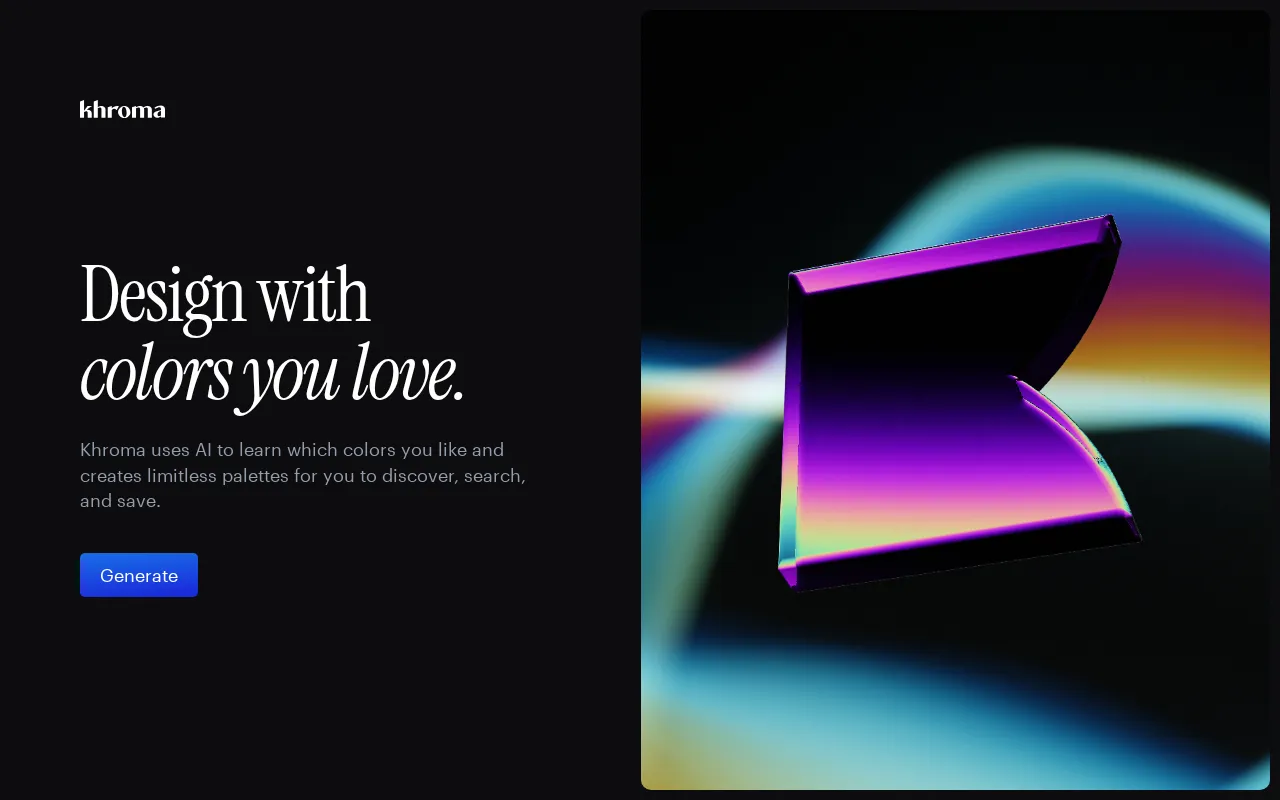
Khroma is a browser-based AI color tool for designers. It learns a user's color preferences from an initial selection, then generates personalized color combinations while filtering out colors the user is less likely to want. The underlying algorithm draws on patterns found across thousands of popular palettes created by people and published online.
Generated combinations can be reviewed in several visual formats, making it possible to assess colors in palettes, gradients, typography samples, or custom images. Khroma also provides practical color data for using a selected combination in design work.
Key Features
- Personalized color generation: Users select colors they like to train a neural network-powered algorithm that proposes relevant combinations and blocks unwanted colors.
- Multiple preview formats: Color combinations can be evaluated as typography, gradients, palettes, or against a custom image.
- Palette search and filters: The generator can be searched by hue, tint, value, named color, hexadecimal code, and RGB values.
- Saved color library: Favorite combinations can be stored in an unlimited collection for later reference.
- Design-ready color details: Each pair includes color names, hex codes, RGB values, and CSS code for use in design and development.
- Accessibility information: Khroma displays a WCAG accessibility rating for each color pair to help users assess contrast.
Use Cases
- Discover color combinations based on personal design preferences.
- Compare palette options across text, gradient, and image-based previews.
- Search for combinations that match a specific hue or color value.
- Save approved palettes and retrieve their CSS, hex, and RGB information.
- Review color-pair accessibility while developing visual identities or interfaces.
Pricing
The homepage does not display prices or describe paid plans. Current pricing details, if applicable, are available on the official Khroma site.
Who Is It For?
Khroma is intended for graphic designers, web designers, UI designers, brand designers, developers, and other visual creators who need a personalized way to discover and organize color combinations. It is particularly useful for people who want searchable palette ideas alongside implementation details and accessibility information.